Stop Playing Blind: What the Math Actually Says About Your Odds at the Casino
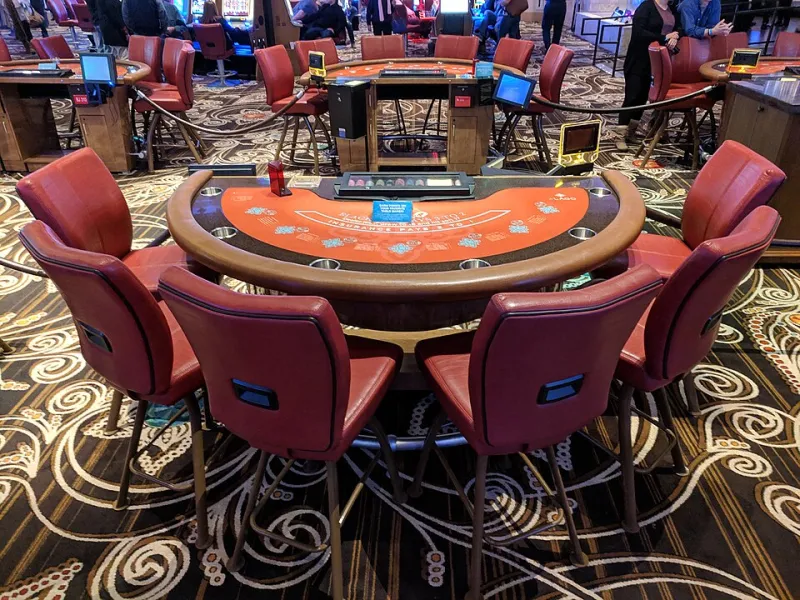
Photo: DanielPenfield, CC BY-SA 4.0, via Wikimedia Commons
Let's be straight with you: the casino always has an edge. That's not a secret, and it's not something MU88Bet is going to sugarcoat. But here's the thing — that edge is not the same across every game. Some games tilt the math so far against you that you're basically lighting money on fire. Others? The gap between the house and the player is surprisingly thin. Knowing the difference isn't just smart — it's the whole game.
If you've ever walked away from a slot machine wondering where your bankroll went, or sat at a blackjack table unsure whether your instincts were helping or hurting, this one's for you.
What Does "House Edge" Actually Mean?
The house edge is the percentage of every dollar wagered that the casino expects to keep over time. Think of it as the cost of playing. A house edge of 5% means that for every $100 you bet, the casino expects to pocket $5 in the long run.
But here's where people get confused — the house edge doesn't mean you'll lose exactly 5% every session. In the short term, variance (more on that in a second) can swing things wildly in your favor or against you. The house edge is a statistical average across millions of bets. That's why you can walk away a winner on any given night even in a game with a steep edge — and why the casino always wins over years of play.
The flip side of house edge is RTP, or Return to Player. If a game has a 95% RTP, the house edge is 5%. Simple math, but a lot of players never bother to look it up.
The Games Worth Your Time (and the Ones That Aren't)
Blackjack: The Player's Best Friend
When played with basic strategy — meaning you follow a mathematically optimal decision chart for every hand — blackjack offers one of the lowest house edges in any casino. We're talking somewhere between 0.5% and 1% depending on the specific rules of the table.
That's remarkable. No other widely available casino game gets that close to even footing. The catch? You actually have to use basic strategy consistently. Gut feelings and hunches push that edge up fast. Grab a strategy card, learn the moves, and blackjack becomes one of the most player-friendly games on the floor.
Video Poker: The Underrated Gem
Seriously underappreciated, video poker — particularly Jacks or Better — can have an RTP above 99% when played with optimal strategy. Some variants even flip the math slightly in the player's favor when progressive jackpots are factored in.
Again, the word "strategy" keeps coming up. That's not a coincidence. The games with the best odds almost always reward players who put in the work to understand them.
Craps: Complex, But Competitive
Craps looks intimidating, but the Pass Line bet carries a house edge of just 1.41%. Add a Free Odds bet behind it — which has literally zero house edge — and you're looking at one of the best bets in the building. Ignore the flashy proposition bets in the center of the table, though. Some of those carry edges north of 10%.
Roulette: Know Your Wheels
American roulette, with its double-zero pocket, carries a house edge of 5.26%. European roulette, with a single zero, drops that down to 2.7%. If you're going to spin the wheel, always choose European when you have the option. It's a simple choice that meaningfully improves your odds over time.
Slots: Fun, But Know What You're Getting Into
Here's the honest truth about slots: they're built for entertainment first. RTP on slot machines typically ranges from 85% to 96%, but that wide range matters — and the specific RTP for any given machine isn't always easy to find. On top of that, slots have high variance, meaning the gap between a big win and a long losing streak can be enormous.
That doesn't mean slots are bad. It means they serve a different purpose. Play them for the experience, set a firm budget, and don't expect them to be your path to consistent profit.
Understanding Variance: The Wild Card in Every Session
Variance is the reason a player can win big on a game with a high house edge, and lose a session on a game with a low one. It measures how much results deviate from the expected average in the short term.
High variance games (like slots or certain poker variants) produce infrequent but potentially massive wins. Your bankroll can get hammered for a long stretch before a big payout hits — or it might never come.
Low variance games (like blackjack or baccarat) produce smaller, more consistent swings. You won't often hit a life-changing jackpot, but your bankroll will hold up longer, and you'll get more playing time per dollar.
The right choice depends on your goals. Chasing a big payday? Higher variance might suit your style. Want to maximize your time at the table with a set budget? Low variance is your lane.
How to Actually Use This Information
Knowing the math is only half the battle. Here's how to put it to work:
- Always check the RTP before you play. Reputable platforms like MU88Bet provide this information. If it's not visible, ask or look it up.
- Learn basic strategy for blackjack. It takes a few hours to get comfortable and can literally halve the house's edge against you.
- Avoid the sucker bets. In craps, roulette, and even baccarat, there are always a few bet types designed to look exciting while quietly draining your bankroll.
- Match the game to your bankroll. High variance games require deeper pockets to survive the swings. Don't play a high-volatility slot with $50 and expect to outlast the math.
- Set a session budget and stick to it. The house edge works against you over time. Shorter sessions with smart game selection give you the best shot.
The Bottom Line
The house edge isn't your enemy — ignorance of it is. When you know which games give you a fighting chance and which ones are stacked against you from the jump, you stop playing blind and start playing smart.
At MU88Bet, the whole point is to bet smarter. That doesn't mean avoiding risk — it means understanding it, respecting it, and making calculated decisions that stretch your dollar further. The math is out there. Now you know how to read it.