Riding High and Going Broke: How Winning Streaks Set the Trap Most Bettors Walk Right Into

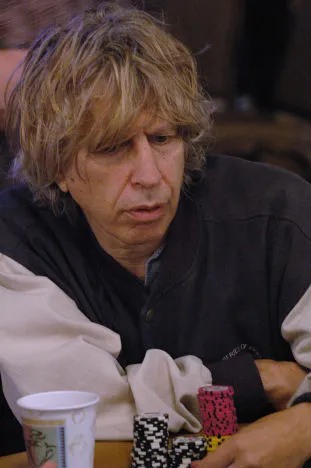
Photo: U.S. Air Force photo by Airman 1st Class Robert Nichols, Public domain, via Wikimedia Commons
There's a specific kind of feeling that settles in after you've gone 8-2 over two weekends of NFL betting. You feel dialed in. Your reads are sharper. Your instincts seem tuned to a frequency the sportsbooks can't hear. You start thinking about bumping your unit size. Maybe doubling it.
And that's exactly when things fall apart.
This isn't a story about bad luck. It's a story about human psychology, statistical reality, and the sneaky way that success in sports betting can become its own form of self-destruction. At MU88Bet, we're all about playing bold — but bold doesn't mean reckless. Here's the difference.
Your Brain Is Wired to See Patterns That Aren't There
Humans are pattern-recognition machines. It's an evolutionary feature, not a bug. For most of human history, noticing patterns in the environment — animal tracks, weather signs, seasonal food sources — was a survival skill. But that same wiring becomes a liability when applied to short-run sequences of random or semi-random events.
Psychologists call it the hot hand fallacy — the belief that recent success makes future success more likely in contexts where outcomes are largely independent. Basketball players and their fans famously believe in shooting streaks that statistical analysis repeatedly fails to confirm. Bettors are even more vulnerable, because unlike free throws, sports betting outcomes feel deeply connected to knowledge and skill, which makes the illusion of momentum even more convincing.
When you go 8-2, your brain doesn't say "I had a nice variance swing." It says "I've figured something out." And that narrative — however compelling — is often fiction.
What Normal Variance Actually Looks Like
Let's ground this in some real numbers, because context is everything.
Assume a bettor operating at a 54% win rate on spread bets — genuinely skilled, long-term profitable territory. Over a 10-game sample, the probability of going 8-2 or better is roughly 16%. That's not rare at all. It happens to one in six bettors over any given ten-game stretch, regardless of skill level.
Conversely, that same 54% bettor will go 3-7 or worse in a 10-game stretch about 12% of the time. Neither streak means anything about underlying skill. They're just the natural turbulence of probabilistic outcomes.
Extend the sample to 50 games and the picture clarifies — but even then, streaks of 10+ wins in a row are statistically possible for average bettors. The streak itself is not the evidence of skill most people assume it is.
The Escalation Trap
Here's how the damage usually unfolds. Bettor goes on a hot run. Confidence climbs. They start rationalizing a unit size increase — "I've built up a cushion, so I can afford to press a little." Stakes double. Maybe triple.
Then variance corrects, as it always does. But now the losses are larger in absolute terms. The cushion evaporates faster than it was built. Panic sets in, which leads to chasing — placing more bets, often at worse value, trying to "get back to even." And that's the spiral.
This pattern has a name in behavioral economics: the house money effect. People treat winnings as psychologically separate from their "real" bankroll, making them more willing to risk profits recklessly. The casino industry has understood this for decades. The best bettors learn to fight it.
Real Stories, Recognizable Patterns
You don't have to look far to find versions of this story. There are countless accounts from online betting communities — Reddit threads, forum posts, Discord servers — of bettors who documented incredible runs, started playing at higher stakes, and then watched their entire bankroll vanish within weeks.
One recurring story type: a bettor goes 15-5 over a month of college football, bumps from $50 units to $200 units, then hits a 4-11 stretch during bowl season. The losses at the higher unit size don't just wipe out the streak's profits — they put the bettor deep in the red. The hot streak financed the losing streak's damage.
This isn't a character flaw. It's a completely predictable response to variance that most bettors aren't mentally prepared for.
Concrete Systems for Staying Grounded
The goal isn't to mute the fun of a hot streak — winning is genuinely great, and you should enjoy it. The goal is to build guardrails that keep your decision-making rational when your emotions are running hot.
1. Set unit sizes in advance and commit to them. Your unit size should be determined by your total bankroll and your long-term plan — not by how you've been running lately. A common guideline is 1-3% of total bankroll per bet. Write it down before the season starts. Revisit it only on a scheduled basis (monthly, quarterly), not after a big weekend.
2. Require a sample before any adjustment. Before you consider changing your unit size upward, require a minimum sample — say, 100 bets — with positive CLV and a strong ROI. Two weeks of good results is not a sample. It's noise.
3. Keep a betting journal. Not just results, but your reasoning for each bet. After a hot streak, go back and honestly evaluate: were those good bets, or did I just run well? This kind of retrospective analysis is humbling in the best way.
4. Create a "streak protocol." Decide in advance what you'll do during a hot run. Something like: "If I win 7 of my last 10, I will not increase stakes. I will take one day off from betting to reset mentally." Having a plan before the emotion hits means you're not making decisions in an altered psychological state.
5. Track variance separately from skill. Use tools like expected value calculators or CLV tracking (see our other strategy content) to separate lucky runs from skillful ones. If your CLV is neutral but your record is hot, you're running above expectation — which means a correction is statistically overdue.
The Mindset Shift That Changes Everything
The bettors who survive long-term — and eventually thrive — are the ones who learn to feel roughly the same after a 7-3 week as after a 3-7 week, provided their process was sound in both cases. That emotional flatness isn't apathy. It's discipline.
At MU88Bet, we believe the most dangerous moment in a bettor's journey isn't the losing streak. It's the winning streak — specifically, the moment when you start believing the streak is telling you something permanent about your abilities.
Enjoy the hot runs. Bank the profits. And whatever you do, don't let the scoreboard write checks your bankroll can't cash.