Clocking In for the House: The Profit Engine You Never See Running
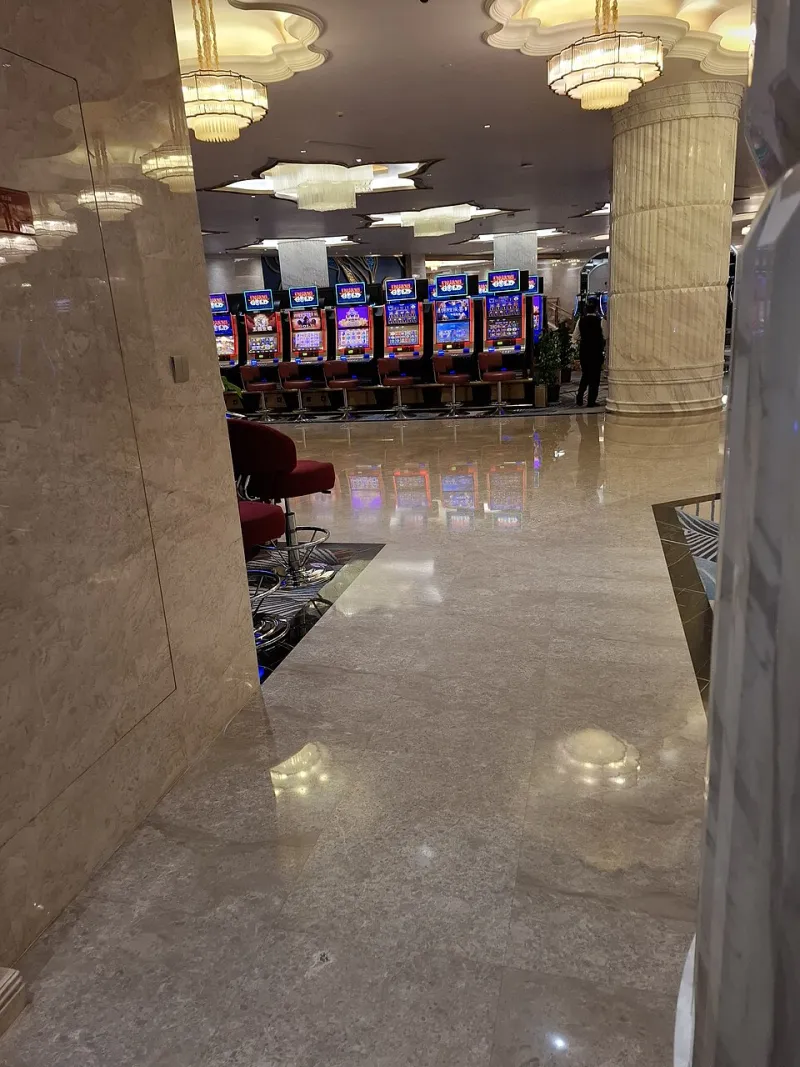
Photo: Millethills, CC0, via Wikimedia Commons
Ask any gambler what the house edge is and they'll rattle off a percentage. Ask them how long they plan to play and you'll usually get a shrug. That shrug is worth billions to the industry, because the dirty secret of casino profitability isn't how much you wager — it's how long you stay plugged in.
The Math Nobody Puts on the Marquee
Every game carries a house edge, but that edge only cashes in when it gets repeated. A 1.5% edge applied once is pocket change. Applied to hundreds of spins an hour, across hours of play, it becomes a reliable income stream. Time is the multiplier that turns a small statistical advantage into a business model.
This is why a $10 bettor who plays for ninety minutes can lose more than a $25 bettor who walks away after twenty. The casino doesn't care which one you are. It just wants you in the second category's chair for as long as possible.
Designed to Make You Forget Your Watch
Step onto a Vegas floor or open a casino app and notice what's missing: clocks, windows, any signal that time exists. Online, the tools are subtler but just as effective.
- Autoplay and quick-spin modes strip out the natural pauses where you might reconsider. A slot that takes four seconds per spin becomes one that takes two, doubling your hourly action without you noticing.
- Loyalty programs reward time, not wins. Points accrue per wager, so the longer you grind, the more 'valuable' your session feels — even if your balance is bleeding.
- Frictionless reloads mean the moment you bust, a deposit is two taps away. There's no walk to the ATM to break the spell.
- 'You've been playing a while' pop-ups sound caring, but they're often calibrated to appear only after you've already generated significant handle. Some jurisdictions mandate them; how they're implemented varies wildly.
None of these features are accidents. They're the product of an industry that understands its own math better than its customers do.
Why Bankroll Advice Skips the Clock
Standard bankroll guidance tells you to set a loss limit and stick to it. Solid advice — but incomplete. A $300 loss limit means something very different over thirty minutes than over six hours. The longer you play, the more certain the edge becomes, and the more likely your session ends at the statistical mean: down.
Time-based limits attack the problem from the other end. Instead of asking 'how much can I afford to lose?', you ask 'how long do I actually want to be here?' It's the question the house hopes you never pose.
Building Your Own Clock-Out Strategy
Fighting back doesn't require willpower superpowers. It requires structure:
1. Set a timer before your first bet, not after. Decide your session length while you're rational and uninvested. When the alarm sounds, you're done — win or lose.
2. Kill the autoplay. If you're playing slots, take manual control of every spin. The added seconds restore the thinking time the software removed.
3. Track your hourly rate, not just your balance. Note your starting bankroll and check in at set intervals. Seeing your loss rate expressed as dollars-per-hour reframes the session in terms your brain actually processes.
4. Use deposit friction deliberately. Remove saved payment methods. Make reloading inconvenient on purpose. Every added step is a chance for the rational version of you to weigh in.
5. Schedule a hard stop tied to something external. A dinner reservation, a show, a workout. Abstract time limits bend; appointments don't.
Time Is the One Thing You Control
You can't change the house edge. You can't rig the RNG. But the duration of your session is entirely yours, and it's the single biggest lever on your expected loss. The casinos built an entire environment around keeping you from noticing the clock. Noticing it anyway might be the sharpest play available.
Play bold — but on your schedule, not theirs.